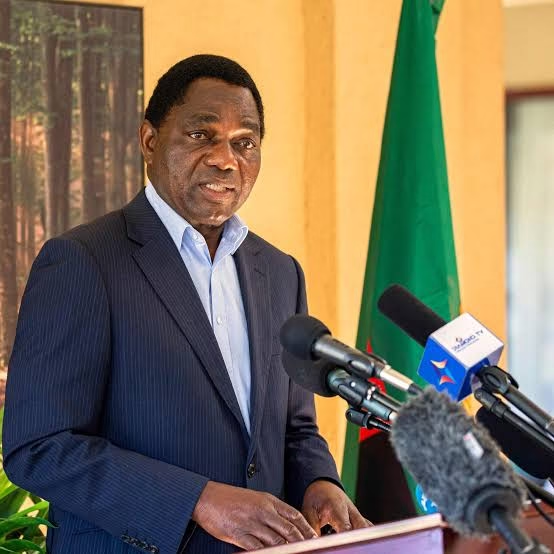

Zambians will vote on Thursday in a closely watched presidential election that will test whether President Hakainde Hichilema’s economic reforms have translated into meaningful improvements in everyday life. About 8.8 million registered voters are expected to cast ballots in the August 13 election across 226 constituencies, 1,858 wards and 13,529 polling stations. Hichilema, 64, is seeking a second five-year term under the United Party for National Development (UPND). He won the presidency in 2021 on his sixth attempt, defeating then-President Edgar Lungu in a peaceful transfer of power that was widely praised across Africa. His government has overseen a major restructuring of Zambia’s debt, restored an IMF-supported economic program and attracted substantial investment, particularly in the mining sector.
Copper remains the backbone of the economy, accounting for about 70% of export earnings, while the government wants to significantly increase production in the coming years. But economic recovery has not eliminated public frustration. High food prices, unemployment, poverty and concerns over electricity supply remain major issues for households. The challenge for Hichilema is convincing voters that improving economic indicators will eventually translate into better living standards.
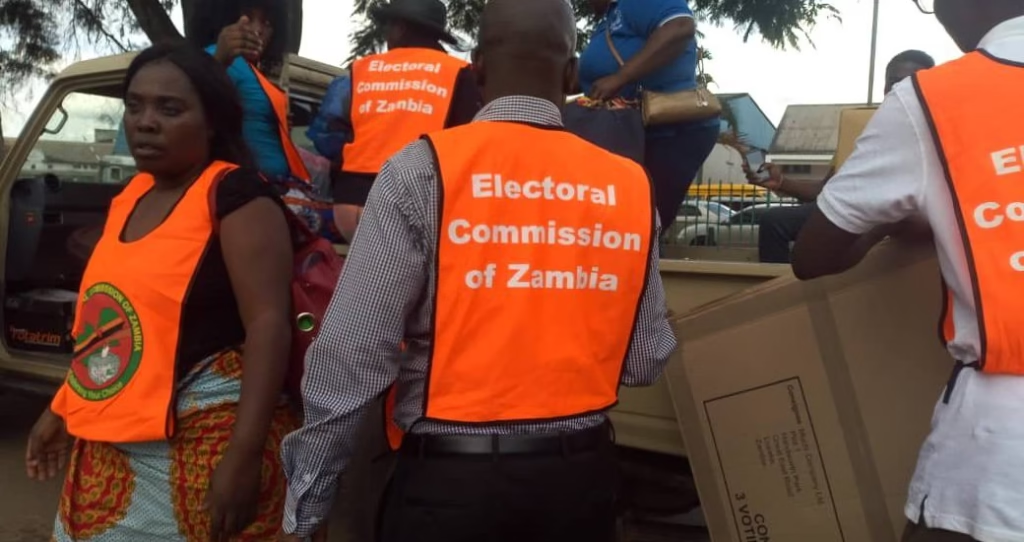
Although 14 candidates have been cleared to contest the presidency, the campaign has increasingly centred on Hichilema and Brian Mundubile, leader of the National Reconciliation Party for Unity and Prosperity. Mundubile, a former minister and political ally of the late Lungu, has benefited from opposition cooperation and is seeking to consolidate support in areas where Lungu’s Patriotic Front was traditionally strong. The large youth electorate could also prove decisive, with younger Zambians closely watching issues such as employment, the cost of living and economic opportunity. Hichilema, meanwhile, is campaigning on continuity. He points to debt restructuring, increased foreign reserves, mining investment and social programs, including free education and expanded school feeding, as evidence of progress during his first term.
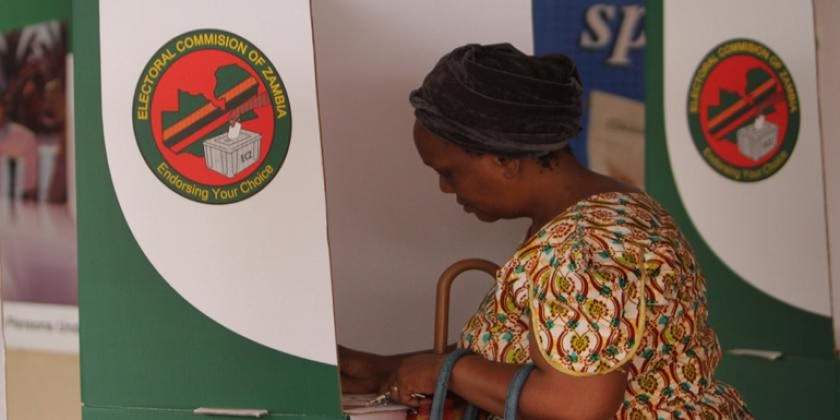
The election will also be closely watched for its impact on Zambia’s reputation for political stability. Campaign tensions, accusations of restrictions on opposition activities and concerns about political freedoms have raised questions about the country’s democratic environment. Polling stations are scheduled to open at 0600 local time on Thursday and close 12 hours later. The presidential candidate who secures more than 50% of valid votes will win outright; otherwise, a runoff will be required. Zambians will also elect members of an expanded Parliament, with the number of directly elected parliamentary seats increasing to 226. For Hichilema, the vote is ultimately a referendum on whether voters believe his economic turnaround deserves more time. For the opposition, it is an opportunity to turn dissatisfaction over living costs into a political comeback.