
Zambia’s top courts were closed and heavily guarded on Monday, August 24, as the deadline approached for opposition candidate Brian Mundubile to challenge President Hakainde Hichilema’s disputed re-election. The High Court, Supreme Court and Constitutional Court in Lusaka, as well as some courts elsewhere in the country, were sealed off. Lawyers and members of the public were reportedly turned away, while police maintained a visible presence around some court premises. A memorandum from the Judiciary’s chief administrator instructed staff not to report for work because of unspecified “security reasons.” Police spokesperson Godfrey Chilabi said security assessments were continuing but did not provide further details.
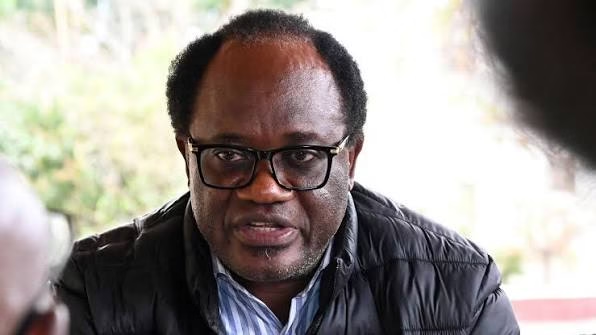
The timing of the closures has triggered particular concern because Monday is the final day for filing a presidential election petition. Mundubile, who finished second, has said he intends to challenge the results over alleged irregularities in the counting, transmission and declaration of votes. The Electoral Commission of Zambia declared Hichilema the winner of the August 13 election, with 60.49% of the vote, compared with 37.87% for Mundubile. Hichilema has rejected allegations of electoral wrongdoing.
The election was largely peaceful on polling day, but observers raised concerns about the campaign environment and vote-counting process. The European Union observer mission reported delays in the tabulation of results, interruptions at some centers and questions about transparency in the transmission and verification of results. Political tensions have also risen since the election. Several opposition figures have been arrested following a security operation in which former minister Mutotwe Kafwaya was killed. The arrests and death have prompted concern from human rights groups and the UN, which has called for due process and respect for fundamental rights. Mundubile has remained in an undisclosed location, saying he fears for his safety. He has nevertheless maintained that his campaign intends to pursue a legal challenge.
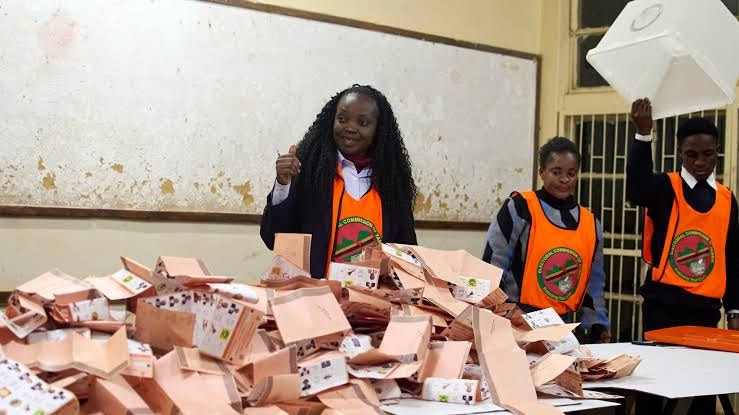
The court closures have now added another layer of uncertainty to an already tense post-election period. Opposition figures and legal experts have questioned whether the shutdown could affect access to justice, while authorities have not publicly explained the specific security threat behind the decision. Meanwhile, preparations for Hichilema’s September 1 inauguration are continuing. Any successful constitutional challenge could potentially affect the next steps in the transition of power. For Zambia, the immediate test is whether the electoral dispute can be resolved through the country’s legal institutions without further escalation.