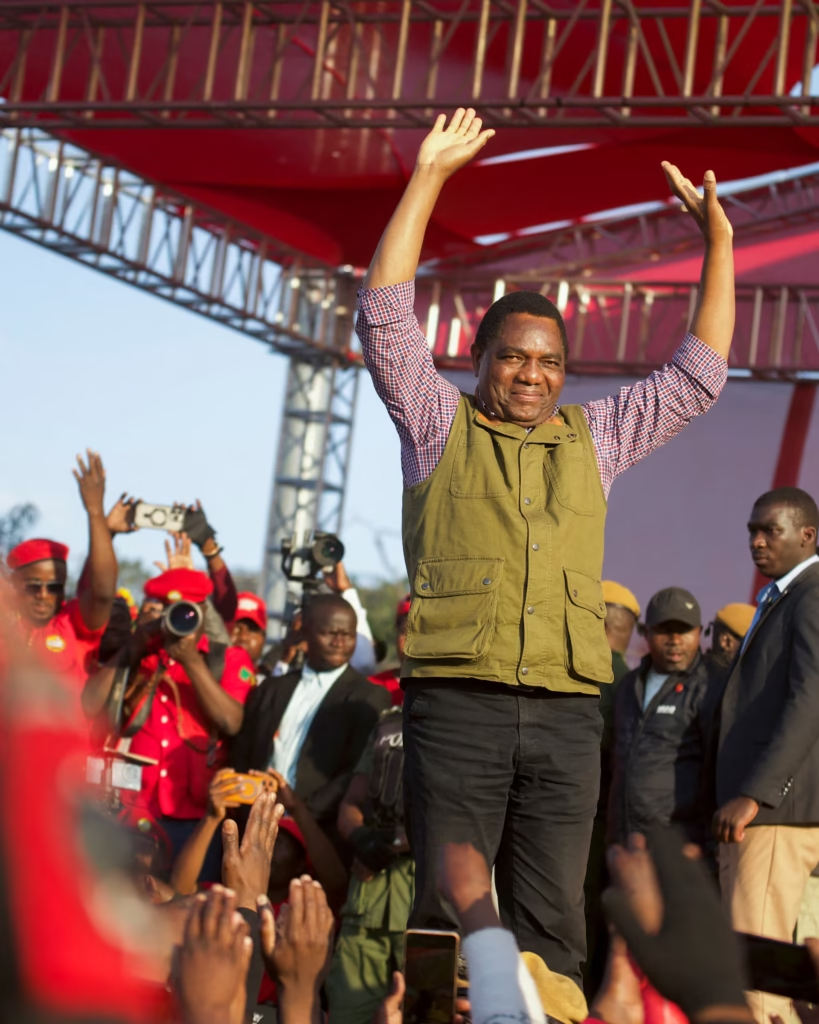

Zambians go to the polls on Thursday in the country’s eighth general election since the return to multiparty democracy in 1991, with the economy, jobs and the cost of living dominating the campaign. President Hakainde Hichilema and his ruling United Party for National Development (UPND) are seeking a second five-year term, arguing that his government needs more time to complete reforms launched after inheriting a debt crisis. Hichilema came to power in 2021 after defeating then-President Edgar Lungu, taking over an economy that had defaulted on part of its external debt. His administration has since reached major debt restructuring agreements with creditors and secured continued support from the International Monetary Fund.
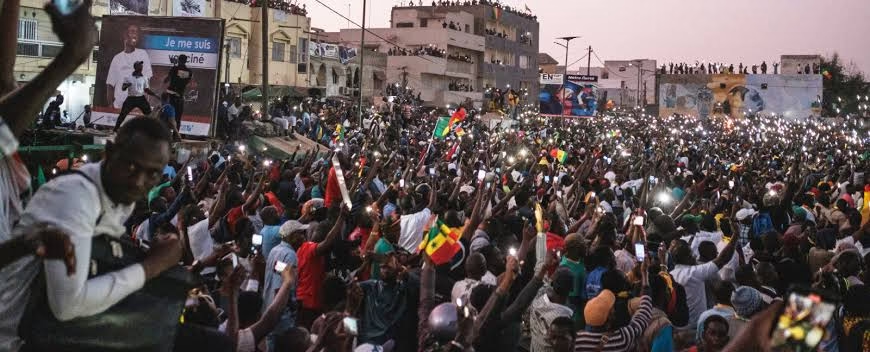
But many voters say the economic recovery has yet to translate into better living conditions. Unemployment, particularly among young people, high food prices and household financial pressures remain major concerns. Political analyst Leah Mitiba says the election could be difficult to predict, particularly if turnout is high. She points to the 2021 election, when strong voter participation helped produce a decisive change of government. Economist Trevor Hambayi argues that Hichilema’s government has had sufficient time to deliver stronger economic results. He also says Zambia could have made greater use of the surge in global copper prices to accelerate recovery.
Copper is central to Zambia’s economy. The country is Africa’s second-largest copper producer, and the government has set an ambitious target of increasing annual production to around 3 million tonnes by 2031, compared with roughly 800,000 tonnes in recent years. The youth vote could prove decisive. About 70% of Zambia’s population is under 30, while millions of young people are registered to vote. Their priorities include employment, education, economic opportunity and the cost of living. For Hichilema, Thursday’s election is a test of whether voters are willing to give his economic programme another five years. For the opposition, it is an opportunity to turn public frustration into a change of government.