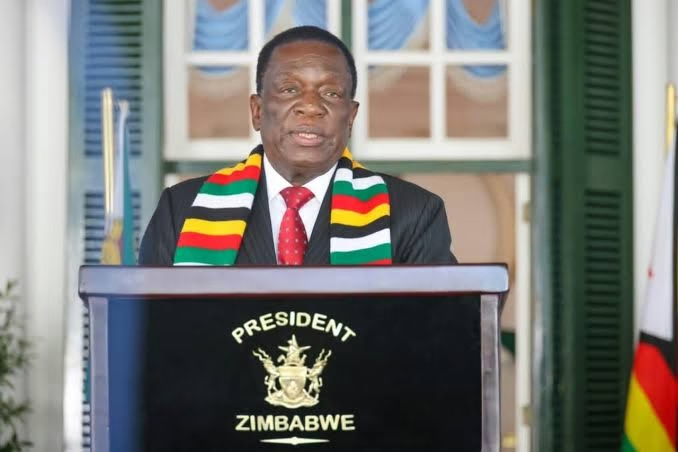

Zimbabwean President Emmerson Mnangagwa has opened the fourth session of the country’s 10th Parliament, highlighting economic stability, agricultural growth and increased mineral processing as key areas of government policy. Addressing lawmakers at the new Parliament building in Mount Hampden, outside Harare, Mnangagwa said stronger foreign-currency inflows and reforms in the financial sector had helped improve currency and exchange-rate stability. Zimbabwe has been working to strengthen confidence in its multi-currency economy after years of currency volatility. Agriculture was a major contributor to economic growth in 2025, expanding by 27.9% and contributing 2.2 percentage points to overall GDP growth of 8.3%, according to figures presented by the president.
Mnangagwa warned, however, that the 2026–27 farming season could face below-normal rainfall. The government has therefore introduced a six-part drought resilience program covering strategic grain reserves, climate-smart agriculture, agricultural financing, livestock support, early-warning systems and farmer capacity building. Mining also featured prominently in the address. Mnangagwa said the government was pushing for greater mineral exploration and local processing to capture more value from Zimbabwe’s natural resources.
He pointed to growing investment in lithium processing, including the production of lithium sulphate, as well as developments in gold, platinum and iron and steel. Parliament has previously recorded the government’s policy of moving the lithium industry further along the value chain, from extraction and concentrates towards processed and finished products. The opening of Parliament comes as Zimbabwe seeks to sustain economic growth while reducing its vulnerability to drought and increasing the domestic benefits of its mineral resources.