


The United Nations migration agency (IOM) has warned that humanitarian operations in Sudan’s war-ravaged North Darfur region are on the verge of total collapse, citing severe funding shortages, growing insecurity, and blocked access to those most in need. In a statement on Tuesday, the International Organization for Migration (IOM) said its warehouses were “nearly empty” and that aid convoys face armed attacks, looting, and checkpoints controlled by rival forces, leaving millions without help. “Despite the rising need, humanitarian operations are now on the brink of collapse,” the IOM said. “If support does not arrive soon, an even greater catastrophe will unfold.”
The warning comes amid the Rapid Support Forces’ (RSF) capture of El-Fasher, the capital of North Darfur, in early November , a turning point in Sudan’s 19-month conflict between the RSF and the Sudanese Armed Forces (SAF). The takeover has triggered mass displacement, mass killings, and reports of ethnic violence, according to the U.N. and international aid groups. The IOM estimates that more than 90,000 people have fled El-Fasher and surrounding villages in recent weeks, braving dangerous routes to reach makeshift camps in Tawila, about 70 kilometers west of the city. Many arrive with nothing, finding only bare shelters, little food, and no medical care.
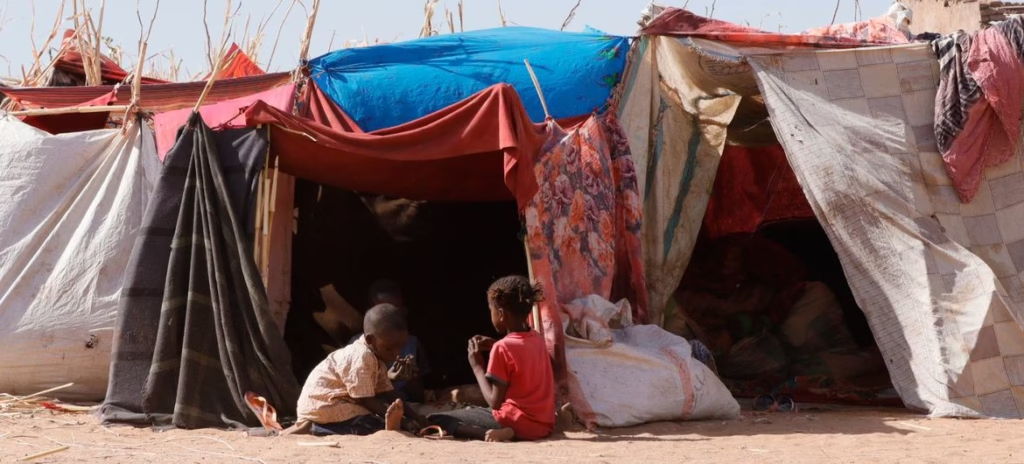
“We only get one meal a day from the community kitchens,” said Sohaiba Omar, 20, who fled with her family to Diba Nayra camp. “We have no clean water or toilets, and people are getting sick from open defecation.” Camp volunteer Batoul Mohamed, 25, said aid workers are overwhelmed. “There are too many displaced people. Every day we hear of new arrivals, hungry, exhausted, and hopeless.” According to IOM Director General Amy Pope, insecurity and dwindling resources mean humanitarian teams are reaching only a fraction of those in need. “We are struggling to deliver the most basic assistance,” she said.
The conflict, which erupted in April 2023, has killed at least 40,000 people and displaced over 12 million, according to U.N. and World Health Organization estimates making it one of the world’s worst humanitarian crises. Aid agencies say the real death toll is likely far higher, with entire areas cut off from monitoring. The violence has since spread beyond Darfur to Kordofan, Blue Nile, and parts of eastern Sudan, forcing tens of thousands more to flee. Between October 26 and November 9, nearly 39,000 people escaped fighting in North Kordofan alone, the IOM reported. The IOM is appealing for urgent international funding and diplomatic pressure to guarantee humanitarian access across frontlines. Without it, the agency warns, millions could face famine and disease in the coming weeks.


