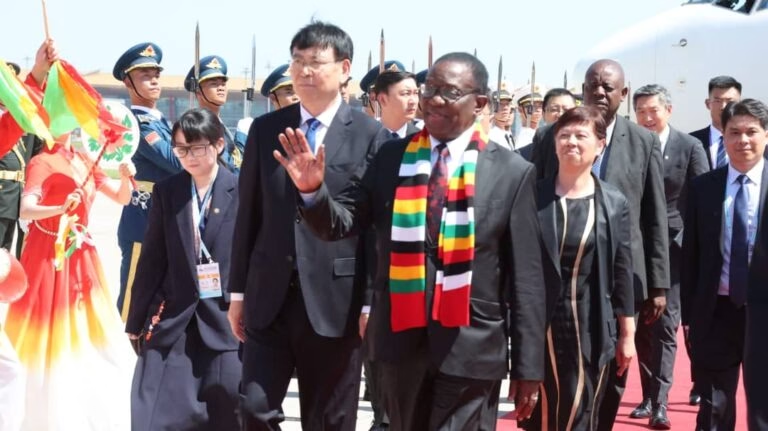
Zimbabwe’s President Emmerson Mnangagwa has arrived in Beijing to join more than two dozen world leaders including Russia’s Vladimir Putin and North Korea’s Kim Jong Un for a high profile military parade and parallel summit that highlight China’s growing bid to reshape global power structure. Mnangagwa is among the dignitaries attending Wednesday’s grand parade in Beijing, staged to mark the 80th anniversary of the end of World War II. The event, which will showcase more than 100 fighter jets, drones, tanks, and long range missiles all made in China aims to demonstrate Beijing’s rapid progress toward military self-reliance and its ability to compete with Western defense industries.
For President Xi Jinping, the spectacle is not just a commemoration but a deliberate signal to Washington and its allies China intends to play a central role in global security architecture. While Beijing displayed its military hardware, a different kind of power play was unfolding in northern China. The Shanghai Cooperation Organization (SCO) a 10 member bloc comprising China, Russia, India, Pakistan, Iran, and Belarus, among others held its annual summit. Founded in 2001 as a security pact, the SCO has grown into one of the world’s largest regional organizations, covering nearly half of humanity and a significant share of global GDP. Yet, its agenda remains loosely defined, straddling counterterrorism, trade, and strategic cooperation.
At the summit, Russian President Vladimir Putin praised the group as “a powerful driver of global development and genuine multilateralism,” framing it as a counterweight to U.S. led alliances. The bloc’s expansion in recent years adding Iran (2023) and Belarus (2024) has tilted it further toward states openly hostile to the West. India, while maintaining ties with Washington, remains a key player, making the SCO a rare forum where U.S. rivals and strategic partners sit at the same table. Analysts say this year’s summit is particularly significant against the backdrop of Russia’s war in Ukraine, U.S.-China trade disputes, and growing skepticism of Western dominance in the Global South.
For Mnangagwa, attending both events underscores Harare’s deepening ties with Beijing, a longstanding ally that has supported Zimbabwe through years of Western sanctions. His presence signals not only solidarity with China but also Zimbabwe’s alignment with emerging power centers outside the Western orbit. While the SCO’s longterm goals remain murky, its growing membership and alignment with China’s global ambitions present a serious challenge to Western influence. Coupled with Beijing’s military display, the week’s events tell a clear story: China and its allies are positioning themselves as architects of a new, multipolar world order whether the West is ready or not.