


Leaders from the European Union and African Union opened the seventh EU-AU summit in Luanda, Angola, on Monday, focusing on deepening political and economic cooperation under the theme “Promoting peace and prosperity through effective multilateralism.” The two-day summit marks 25 years of EU-AU partnership and comes as Africa celebrates 50 years of independence for several nations. Angola’s President João Lourenço co-chaired the meeting alongside European Council President António Costa, with European Commission President Ursula von der Leyen and AU Commission Chair Mahmoud Ali Youssouf also in attendance.
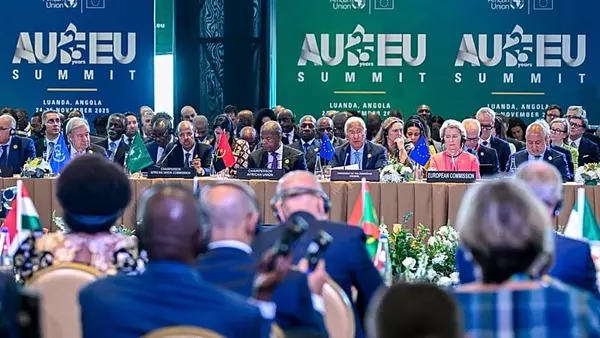
Discussions centered on peace and security, governance, migration, economic integration, and the future of multilateral cooperation. The EU remains Africa’s largest trading partner and main export market—well ahead of China, India, and the United States. Combined, African nations also rank as the EU’s fourth-largest trading partner. A major highlight was the EU’s financial commitment. Brussels has already invested €120 billion under its Global Gateway infrastructure and development initiative and plans to scale this to €150 billion by 2027. The investments are aimed at accelerating Africa’s green and digital transition, improving education and health systems, and boosting economic growth.
Specific projects were also discussed, including more than €200 billion in planned investments for Zambia to support industrial development. The EU is also working with regional partners to modernize the 1,300-kilometer Lobito Corridor railway, which connects Zambia and the Democratic Republic of Congo to Angola’s port of Lobito, an important trade route expected to enhance regional logistics and exports. In Angola, European companies have launched training programs for local farmers and small businesses to help them meet EU standards and expand export capacity as part of a broader effort to strengthen economic links and reduce dependency on raw material exports. Von der Leyen emphasized that in a shifting global landscape, “Africa and Europe need each other more than ever,” underscoring the strategic importance of the partnership amid growing influence from Russia, China, and the United States on the continent.


