


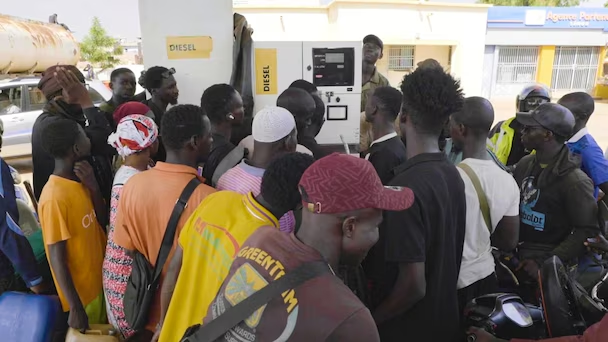
Residents of Mali’s capital, Bamako, are grappling with a severe fuel shortage after weeks of a militant blockade that has crippled fuel imports into the landlocked West African nation. By Tuesday, long queues of cars and motorcycles stretched for blocks outside the few gas stations still operating, as desperate commuters searched for fuel. Many have resorted to buying small quantities from roadside vendors at black market prices up to triple the official rate. The crisis stems from a blockade declared in early September by Jama’at Nusrat al-Islam wal-Muslimin (JNIM), an al-Qaida-affiliated group that has been attacking fuel convoys from Senegal and Ivory Coast, Mali’s main import routes.
“It’s almost impossible to find petrol,” said Bakary Coulibaly, a street vendor who sells fuel from plastic containers. “Only a few stations have it, and when they do, the lines are endless.” At one station in central Bamako, tempers flared as drivers argued over scarce fuel. “We know we are at war,” said Douga Barry, a motorcycle taxi driver. “Even if we have to walk, we’ll endure this. But the government must find a solution.” The blockade has paralyzed transportation, increased food and goods prices, and heightened frustration among citizens already struggling with inflation and unemployment. Mali’s Petroleum Importers Association reported last month that over 100 tanker trucks had been burned or destroyed by JNIM fighters in recent attacks along major trade corridors.
Analysts warn that the crisis could further strain Mali’s military junta, which seized power in 2021 promising to restore stability but has instead faced escalating militant violence. Despite government claims of progress, attacks by al-Qaida and Islamic State-linked groups have surged across the Sahel region. In response, Mali’s armed forces have begun military escorts for fuel convoys from the borders with Senegal and Ivory Coast. On Monday, the army said it had destroyed several JNIM hideouts in the Kolondiéba region, near the Ivorian border, following an attack on a fuel convoy. Still, the shortage persists, threatening to choke daily life in the capital and deepen Mali’s economic troubles. Despite being one of Africa’s top gold producers, Mali remains among the world’s poorest countries, with nearly half its population living below the poverty line. The ongoing blockade now risks worsening the humanitarian situation as hospitals, transport services, and small businesses face crippling energy shortages.


