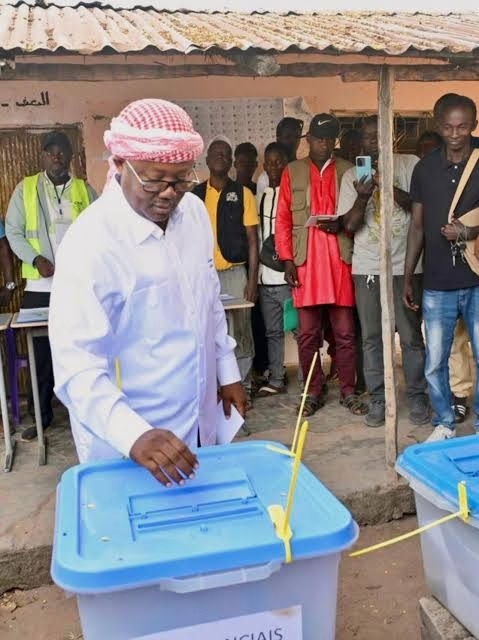

Voters in military-ruled Guinea-Bissau went to the polls on Sunday in a constitutional referendum that could significantly strengthen the powers of the presidency ahead of planned elections to restore civilian rule. Polling stations opened at 07:00 GMT, although heavy morning rain slowed voting in parts of the capital. Security was increased around key locations, with police and National Guard personnel deployed. The referendum is being held less than a year after the military seized power following the disputed political crisis that brought an end to President Umaro Sissoco Embalo’s government.
The proposed constitution would replace Guinea-Bissau’s parliamentary system with a presidential model, giving the president authority to appoint and dismiss the prime minister and cabinet and to dissolve parliament. The military-backed transitional government says the changes are designed to end years of institutional instability and prevent repeated clashes between presidents, prime ministers and parliament. General Horta N’Tam, appointed transitional president after the coup, is barred under the transitional charter from contesting the planned elections. The junta has scheduled presidential and parliamentary elections for December 6, saying the vote will mark a return to civilian government. However, opposition groups have urged voters to boycott the referendum, arguing that political freedoms have been restricted since the military takeover.
Guinea-Bissau has a long history of political instability. The country has experienced multiple coups and attempted coups since gaining independence from Portugal in 1974, while disputes between successive presidents and governments have repeatedly paralyzed state institutions. For some voters, however, stability is the overriding concern. Shopkeeper Halimatou Traore said years of political crises had damaged livelihoods and expressed hope that the new constitution could put the country on a different path. The referendum is being closely watched because its outcome could shape the balance of power between the presidency and parliament and determine the political framework under which Guinea-Bissau returns to civilian rule.