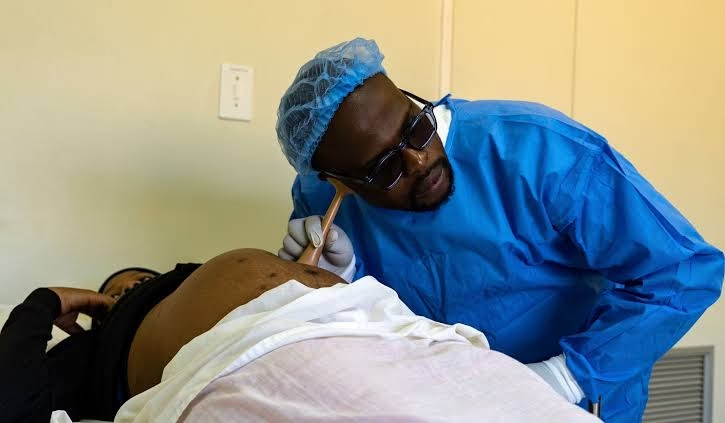

In Lesotho, male midwives are becoming an increasingly familiar presence in maternity wards, helping provide essential care in rural communities where shortages of health workers remain a major challenge. At Mpharane Health Centre, midwife Ntlhane Sehloho has spent about two decades caring for expectant mothers. He is among an estimated 300 male midwives working in the country, although Lesotho’s government does not officially track midwives by gender. Sehloho says his decision to enter nursing was shaped by growing up in a remote community where pregnant women often struggled to reach healthcare facilities and some gave birth at home. Lesotho, a mountainous country of just over 2 million people, has made progress in expanding maternal healthcare. UNICEF data show that about 92% of births are now attended by skilled health workers. However, maternal mortality remains high, with UN estimates putting the rate at roughly 530 deaths per 100,000 live births, compared with a global average of about 200.
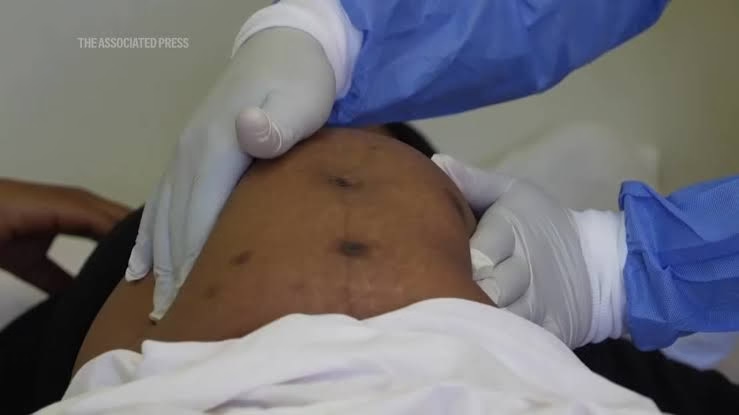
Health authorities have encouraged male nurses to train as midwives to help address shortages, particularly in rural areas. Sehloho travels for around three hours over mountainous roads to reach the health center where he works. While some expectant mothers remain more comfortable with female midwives, others say the gender of their healthcare provider does not affect the quality of care. Mpolokeng Mafereka, an expectant mother at the clinic, said she would prefer a female provider because she feels more comfortable discussing pregnancy-related issues with women. But 21-year-old Bonolo Tebello said she has no concerns about being treated by a male midwife. “I’m happy to be treated by a male because they still provide the same level of care,” she said.
According to the World Health Organization, men account for less than 1% of midwives globally, making Lesotho’s growing number of male midwives unusual internationally. Blandina Motaung of UNFPA said male midwives can sometimes bring a particularly careful approach to maternity care because they experience pregnancy and childbirth from a different perspective. For Sehloho, however, the most important issue is trust. He uses humor, conversation and his own rural background to help women feel comfortable. After two decades in the profession, he says seeing children he helped deliver growing up remains one of the most rewarding parts of his work. Lesotho’s experience highlights both the progress made in expanding skilled maternity care and the continuing need to recruit and retain more healthcare workers regardless of gender to reduce preventable deaths during pregnancy and childbirth.