Tanzanian President Samia Suluhu Hassan is facing mounting international pressure after a coalition of regional and global civil society groups formally petitioned the International Criminal Court (ICC) to investigate alleged crimes against humanity linked to the disputed October 29 presidential election.
The 82-page submission filed by organisations including the Madrid Bar Association, the World Jurists Association, and several East African rights groups accuses state authorities of orchestrating killings, torture, enforced disappearances, sexual violence, arbitrary detentions, and the displacement of civilians. The petition argues that, as commander-in-chief, President Suluhu bears ultimate responsibility for the actions of security forces. A lawyer representing alleged victims said many abuses were documented between election day and the weeks that followed.
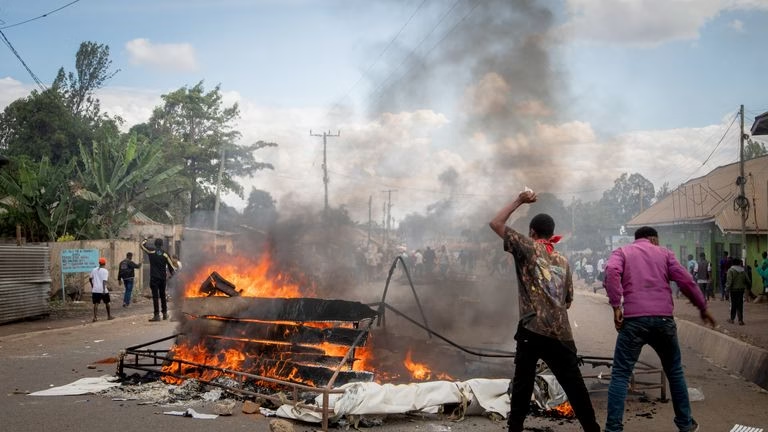
The Tanzanian government has rejected accusations of widespread violations but cancelled the country’s Independence Day celebrations as criticism intensified at home and abroad. Suluhu has defended the election outcome and proposed a limited reconciliation process, though opposition parties and rights organisations say the measures fall far short of accountability. The ICC has acknowledged receipt of the petition but has not opened a formal investigation. Petitioners are urging the court’s Prosecutor to act swiftly, citing what they describe as a deteriorating political environment and the worst governance crisis Tanzania has faced in decades. The coming months are expected to be pivotal, with global attention now focused on whether The Hague will take up the case and how Tanzania’s government will navigate the growing pressure.