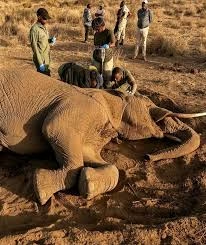

Four people have been arrested as Kenyan authorities investigate the deaths of 18 elephants in the Amboseli ecosystem, in a case that has raised fresh concerns about pesticide misuse and growing conflict between wildlife and farming communities. Kenya’s Tourism and Wildlife Cabinet Secretary, Rebecca Miano, said on Saturday that three Kenyans and one Tanzanian were arrested as persons of interest. Investigators are also pursuing another individual believed to have information relevant to the case. The suspects have been released on bail, while investigations continue.
The first 15 elephant deaths were recorded between June 24 and July 24, with additional deaths reported afterward. The affected animals were mainly adult females and calves. Veterinary teams observed weakness and partial paralysis before some of the elephants died. Preliminary laboratory findings have pointed to possible cyanide poisoning, with investigators examining whether the elephants consumed tomatoes contaminated with agricultural chemicals from farms near wildlife habitats. However, Kenyan authorities stress that the findings are still subject to confirmatory scientific testing and that the precise source of the suspected toxin has not yet been established. The investigation has focused partly on the Kimana area, where farmland borders wildlife corridors used by elephants moving between protected areas in search of food and water. Authorities have also recovered unlabeled substances believed to have originated from a neighboring country and sent them for further analysis.
Importantly, officials have not established that the arrested individuals deliberately poisoned the elephants. Miano said the arrests and recovery of materials do not, by themselves, prove criminal responsibility. Investigators are examining whether pesticides or other agricultural chemicals were illegally used, stored or disposed of, as well as whether soil, water, vegetation or other environmental factors could have contributed to the deaths. The deaths have highlighted the difficult relationship between conservation and agriculture around Amboseli, an ecosystem supporting a large elephant population and extensive farming activity. Kenya Wildlife Service has intensified patrols, elephant monitoring and veterinary surveillance while the investigation continues. Authorities have also said there is currently no evidence that the incident is linked to an infectious or transmissible disease, and Amboseli National Park remains open to visitors.