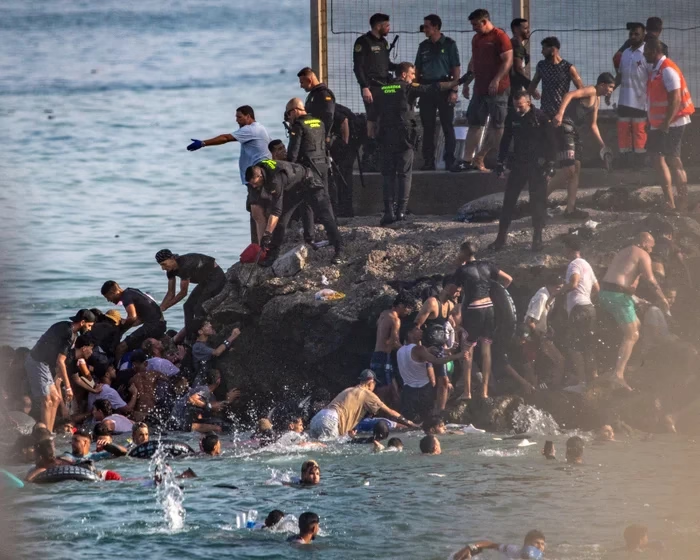

Morocco has confirmed that 11 migrants died while attempting to reach the Spanish enclave of Ceuta last week, sharply contrasting with Spanish estimates that place the death toll at at least 72, as investigations into the tragedy continue. In its first official casualty report released on Sunday, Morocco’s Interior Ministry said 10 of the victims drowned, while another died after falling from a rocky cliff during the attempted crossing. Authorities said they are working with Spain to verify the total number of deaths and identify bodies recovered on both sides of the border. The deadly incident followed a surge in attempted crossings between Wednesday and Friday, when tens of thousands of migrants sought to enter Ceuta, one of Spain’s two autonomous enclaves on the North African coast and a key gateway into the European Union.
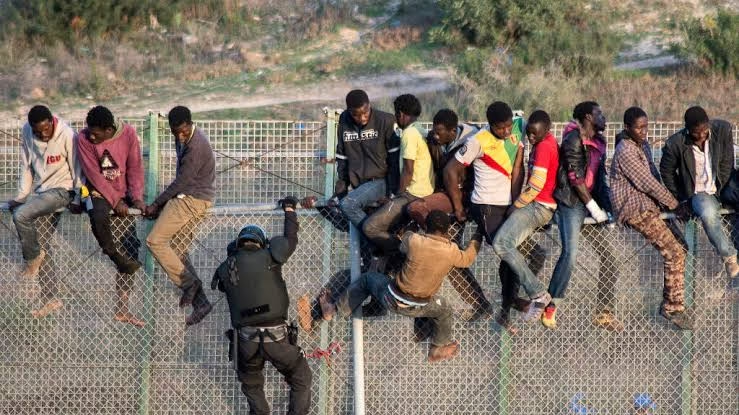
According to Interior Ministry spokesperson Rachid El Khalfi, Moroccan authorities recorded about 40,000 attempts to cross illegally into Ceuta during the period. The ministry also reported that 1,135 migrants attempted to enter the nearby Spanish enclave of Melilla, but were immediately returned to Moroccan territory. Spanish authorities, however, estimate that more than 60,000 people successfully entered Ceuta during the mass crossings, although many have since been returned to Morocco under bilateral migration agreements. Morocco attributed the sudden influx to what it described as the “malicious exploitation” of social media and the spread of false information encouraging irregular migration. Officials also cited public misunderstanding of a July 8 ruling by Spain’s Supreme Court, which clarified legal protections for some migrants arriving by sea.
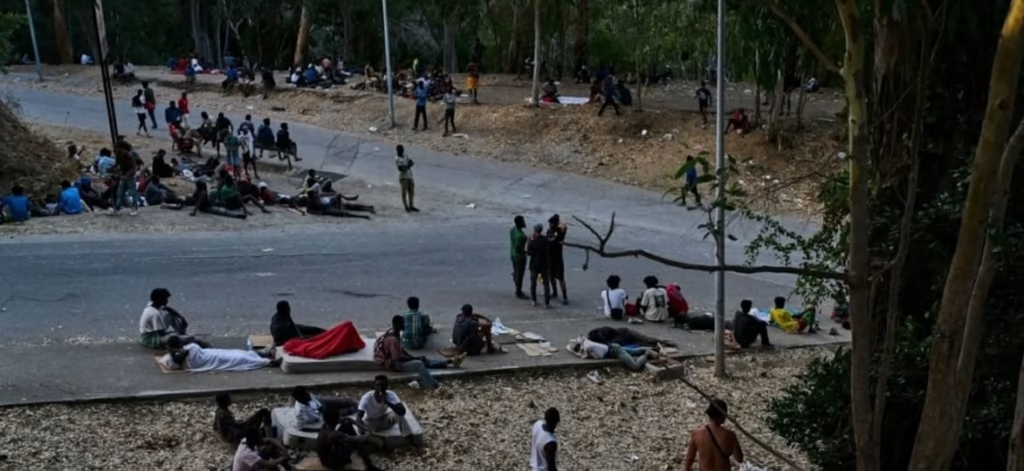
Meanwhile, the Moroccan Association for Human Rights (AMDH) has disputed the official figures, claiming that nearly 130 people may have died or gone missing during the crossings. Moroccan prosecutors have launched an official investigation into the incident, while the differing casualty figures have fueled calls from human rights organizations for an independent inquiry into the circumstances surrounding one of the deadliest migration tragedies in the western Mediterranean in recent years. The incident has also intensified debate over migration management between Morocco, Spain, and the European Union, as authorities seek to prevent further loss of life along one of the world’s busiest irregular migration routes.