
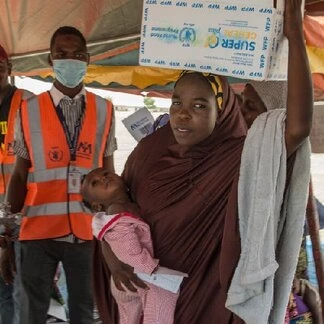

Nigeria is facing one of the worst hunger emergencies in its history, with aid agencies warning that millions are at risk of famine, particularly in the conflict-ravaged northern states where communities are fleeing Boko Haram and Islamic State West Africa Province (ISWAP) violence. The World Food Programme (WFP) says at least 600,000 children could die from severe malnutrition in the coming months if urgent funding is not restored. Across the country, nearly 26 million Nigerians are projected to face acute food insecurity this year the highest figure ever recorded in the nation’s history, according to the UN Office for the Coordination of Humanitarian Affairs (OCHA).
“Millions of people desperately need our help,” said Ancel Kats, WFP’s country director in Nigeria. “But the funding simply isn’t forthcoming.” While humanitarian needs are soaring, international aid has plummeted. Last year, the WFP shut down more than 150 nutrition clinics serving malnourished children and mothers due to funding shortages. The agency now faces a $115 million shortfall to continue its operations in Nigeria alone. The crisis deepened after the United States slashed its aid budget early this year. Washington had previously funded more than half of Nigeria’s humanitarian assistance, but the closure of USAID under President Donald Trump’s administration and similar cuts from other Western donors have severely weakened the global aid response.
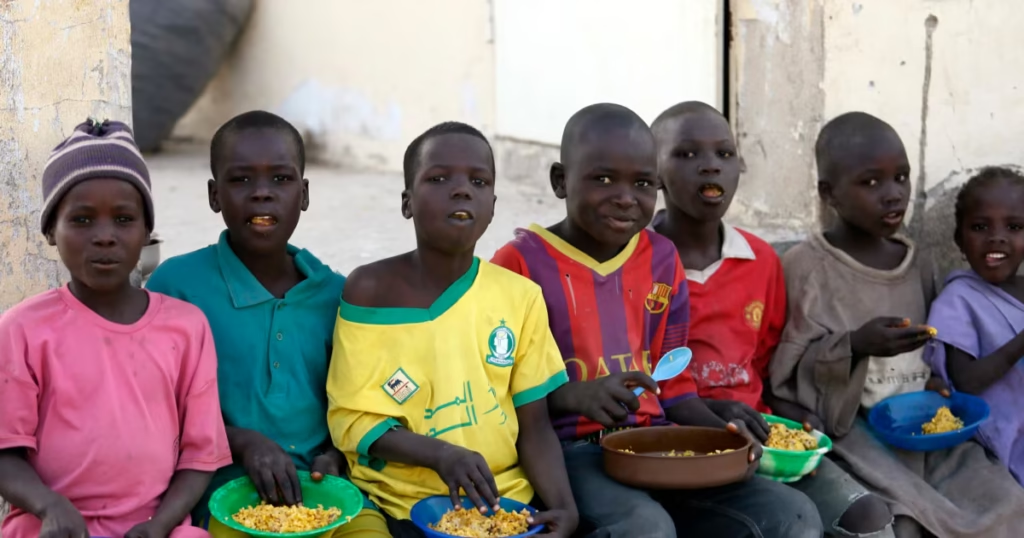
The effects are being felt most acutely in Borno State, the epicenter of Nigeria’s 15-year insurgency. In the Bama refugee camp, where tens of thousands depend entirely on food aid, rations have already been cut. “They all depend on WFP to survive,” said Soumbami Tukunabo of the Italian NGO InterSOS. “It would be devastating to tell them that funding cuts mean fewer people will get food.” The funding crisis has also crippled other vital services. Since the end of USAID operations, Nigeria has lost an estimated $600 million in health funding, roughly 20% of its health sector budget, threatening vaccination programs and disease control efforts. Aid groups warn that without an immediate international response, the combined impact of conflict, climate shocks, and donor fatigue could push parts of northern Nigeria to the brink of famine a humanitarian disaster reminiscent of the 2016 crisis that killed thousands of children in the region.


