


Kenyan legal scholar Professor Phoebe Okowa has been elected to the International Court of Justice (ICJ) after a tense, multi-round vote at the United Nations that saw four African candidates competing for a single seat on the world’s top judicial body. The election, held Thursday, required candidates to secure majorities in both the UN General Assembly and the Security Council — a process that often leads to extended negotiations and strategic withdrawals. Okowa faced contenders from Nigeria, Sierra Leone, and Ghana, turning the race into one of the most closely watched African judicial contests in recent years. After several deadlocked rounds, Ghana’s Paul Kuruk and Nigeria’s Dr. Olufemi Elias withdrew, leaving Okowa in a final showdown with Sierra Leone’s Charles Jalloh, a respected international law professor.
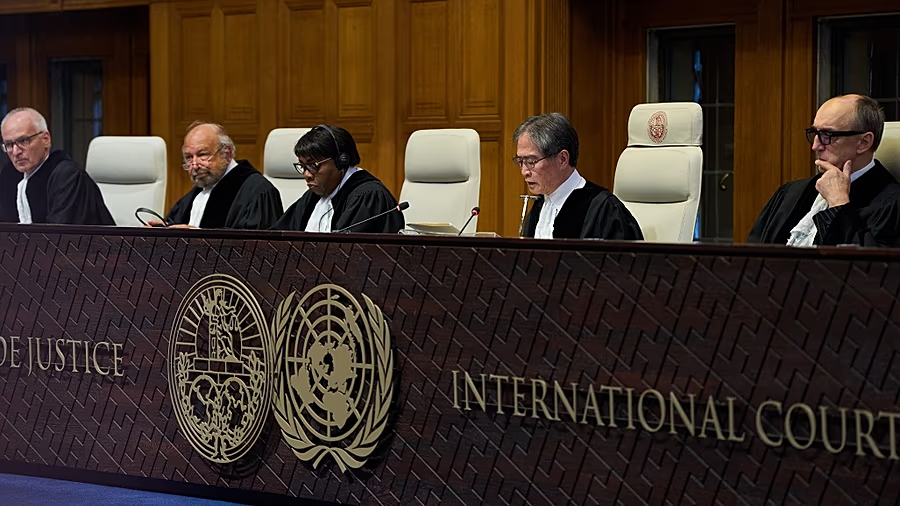
Okowa triumphed with 106 votes to Jalloh’s 79 in the General Assembly and a razor-thin 8–7 win in the Security Council, securing the dual majorities required under the UN Charter. General Assembly President Annalena Baerbock confirmed her election, declaring that Okowa had achieved the needed absolute majority in both chambers. A professor of international law at Queen Mary University of London and a former member of the UN International Law Commission, Okowa brings decades of experience in environmental law, state responsibility, and dispute resolution. She becomes only the second Kenyan to serve on the ICJ after Justice Abdulqawi Ahmed Yusuf, whom she replaces following his resignation effective September 30, 2025.
Her term begins immediately and runs until February 5, 2027, completing the remainder of Yusuf’s mandate. The ICJ, often referred to as the World Court, settles disputes between states and provides authoritative opinions on international legal questions making Okowa’s election a significant milestone for Kenya and African representation in global justice.


