
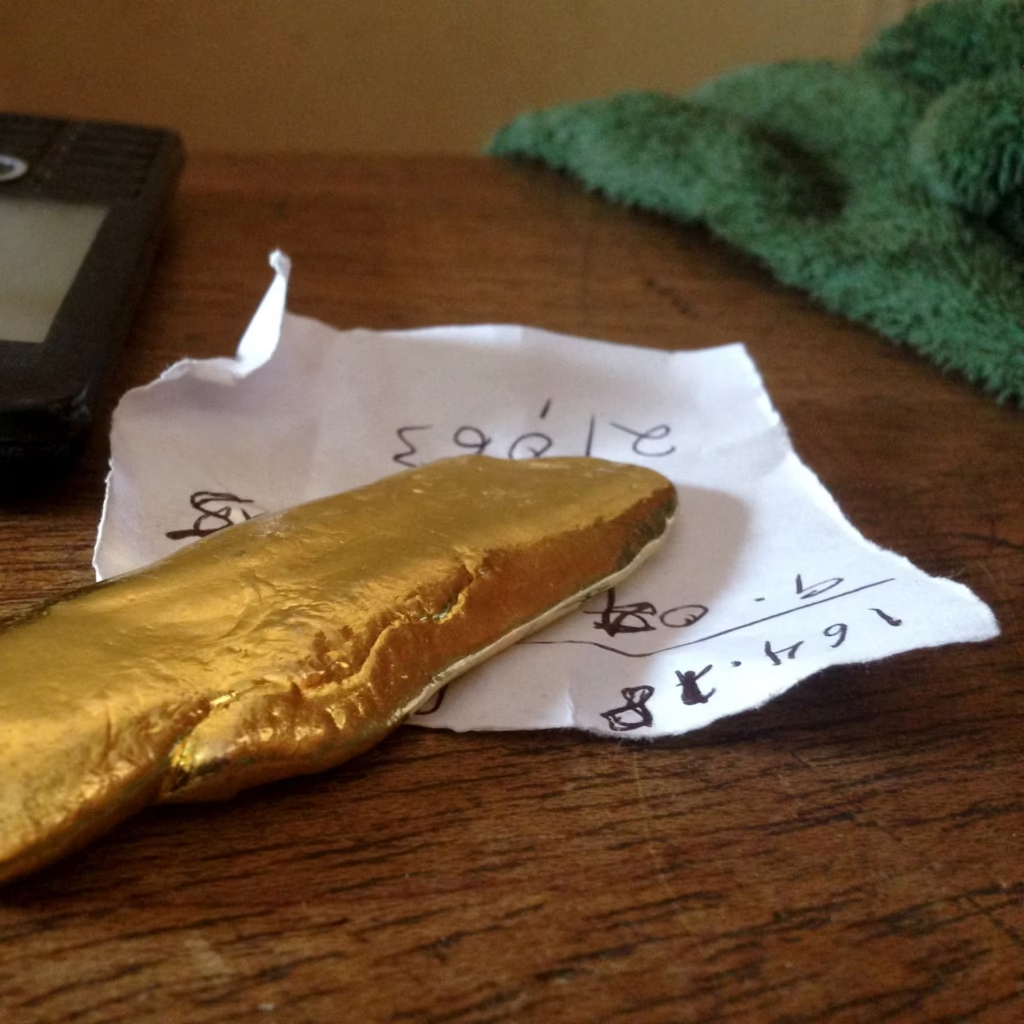

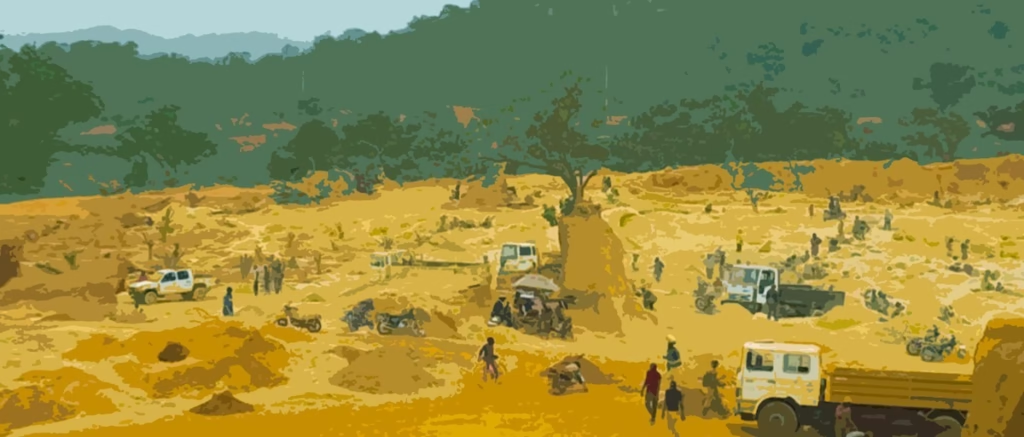
Senegalese President Bassirou Diomaye Faye has ordered the creation of a National Gold Trading Centre, a major step aimed at tightening state oversight of the country’s gold industry and stopping the vast illegal exports draining the economy. Calling the initiative a “sovereign imperative,” Faye said the new structure will help restore transparency, improve revenue collection, and prevent the outflow of unrecorded gold—a problem long linked to weak regulation and informal mining networks. A 2023 report by Swiss NGO SWISSAID revealed the scale of losses: between 36 and 41 tonnes of gold were smuggled out of Senegal from 2013 to 2022, costing the country an estimated $2.38–$2.71 billion in lost revenue. Much of the smuggling originates from artisanal and small-scale mining, which employs tens of thousands but operates largely outside formal channels.
President Faye also announced a full restructuring of the mining sector, instructing the government to draft a new Mining Code before year’s end and to overhaul state-owned companies involved in extraction and trading. The reforms are intended to strengthen governance, close regulatory loopholes, and align with global transparency standards. Gold remains Senegal’s most valuable mineral resource. In the first half of 2024, official gold exports reached roughly $244 million, representing nearly 30% of total extractive-sector shipments. The new trading centre and regulatory overhaul mark the country’s most ambitious effort yet to combat smuggling and ensure Senegal fully benefits from its natural resources.


