


The World Health Organization (WHO) has issued an urgent warning over the accelerating spread of Mpox, reporting new outbreaks in 17 African countries and the virus’s first ever detections in Malaysia, Namibia, the Netherlands, Portugal, and Spain. Between September 14 and October 19, the WHO confirmed 2,862 new cases and 17 deaths, marking one of the sharpest surges since the 2022 global outbreak. Countries with sustained transmission include Democratic Republic of Congo, Nigeria, Ghana, Cameroon, and Central African Republic, according to the agency’s latest situation report.
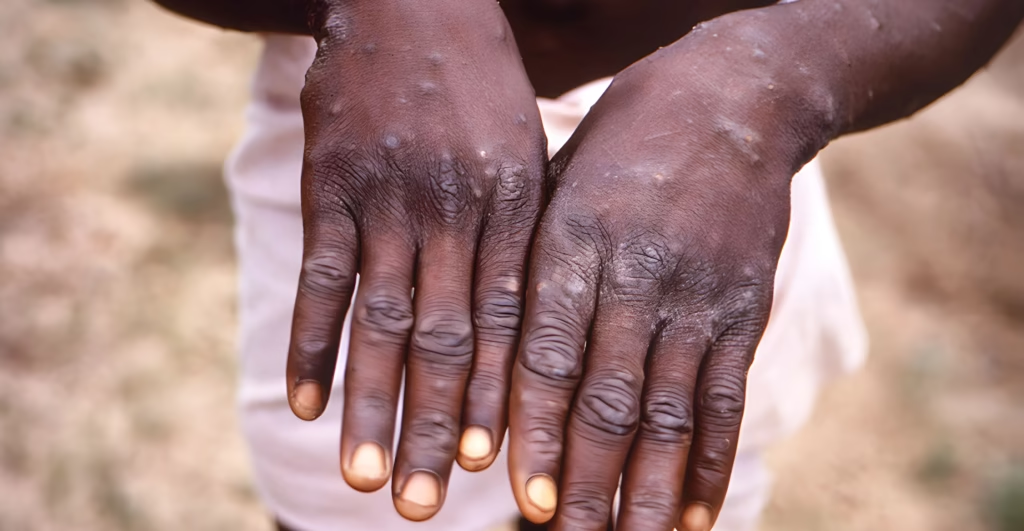
Formerly known as monkeypox, Mpox is a viral disease related to smallpox, spread primarily through close physical contact. While most infections are mild, severe cases have been reported among immunocompromised individuals and in areas with limited healthcare access. The WHO expressed concern about underreported cases and potential new variants, warning that inconsistent surveillance and unequal vaccine distribution could allow the virus to become endemic in parts of Africa. “We’re seeing signs that Mpox is spreading silently through communities,” said Dr. Rosamund Lewis, WHO’s Technical Lead for Mpox. “Stronger testing, contact tracing, and vaccine access are critical to stopping this disease from taking hold again.”
The WHO called on governments to expand vaccination programs, strengthen cross-border monitoring, and share genomic data to track possible mutations. The agency also urged renewed funding for public health laboratories and community education to counter misinformation. The latest surge follows the 2022–2023 global outbreak that infected more than 90,000 people across 100 countries, leading the WHO to declare a Public Health Emergency of International Concern later lifted in 2023. Public health experts say that while containment is still possible, coordinated international action is urgently needed to prevent a return to crisis levels.


